- No products in the cart.
Introduction
Planning a grand, multi-day celebration—from the vibrant Sangeet to the spectacular Reception—is a joyous journey that requires precision. When your wedding is an elaborate experience with a significant itinerary and traveling guests, the standard 6-8 week invitation timeline simply won’t suffice.
At Esgee Art & Design, we understand that a strategic Indian Wedding Invitation Timing is critical for both the flawless execution of your event and for ensuring your guests can participate in every ceremony without logistical stress. Your stationery sets the sophisticated tone for your entire celebration, let’s ensure the timing is just as perfect. This is meant to be a general guideline, and you are free to make adjustments to portions of the timeline as needed!
Here is the definitive, expert-recommended timeline for sending your Indian wedding invitations – Let’s get into it!
Phase 1: Save-the-Date (The Advance Notice)
For any multi-day Indian wedding where travel is involved, the Save-the-Date is the most important piece of preliminary communication. This doesn’t necessarily have to be a physical card, a digital invitation will suffice to let all those know who are travelling abroad. The goal is to give them a heads up and start booking time off!
| When to Send | 8–12 Months Before the First Event |
| Why This Early? | Travel Logistics: Guests need maximum time to secure flights and accommodation, especially if your date falls during a popular travel season. Multi-Day Commitment: Indian weddings involve 3+ events; guests require ample notice to request extended time off from work. Logistical Certainty: This early notice allows traveling guests to organize international or long-distance logistics well in advance. |
| Design & Experience Tip | We recommend a beautifully designed digital Save-the-Date initially (as soon as the venues are booked), followed by a minimalist, branded physical card delivered at the 8-month mark. Ensure it clearly directs guests to your wedding website for essential hotel and travel links. |
Phase 2: The Formal Invitation Suite (The Detailed Itinerary)
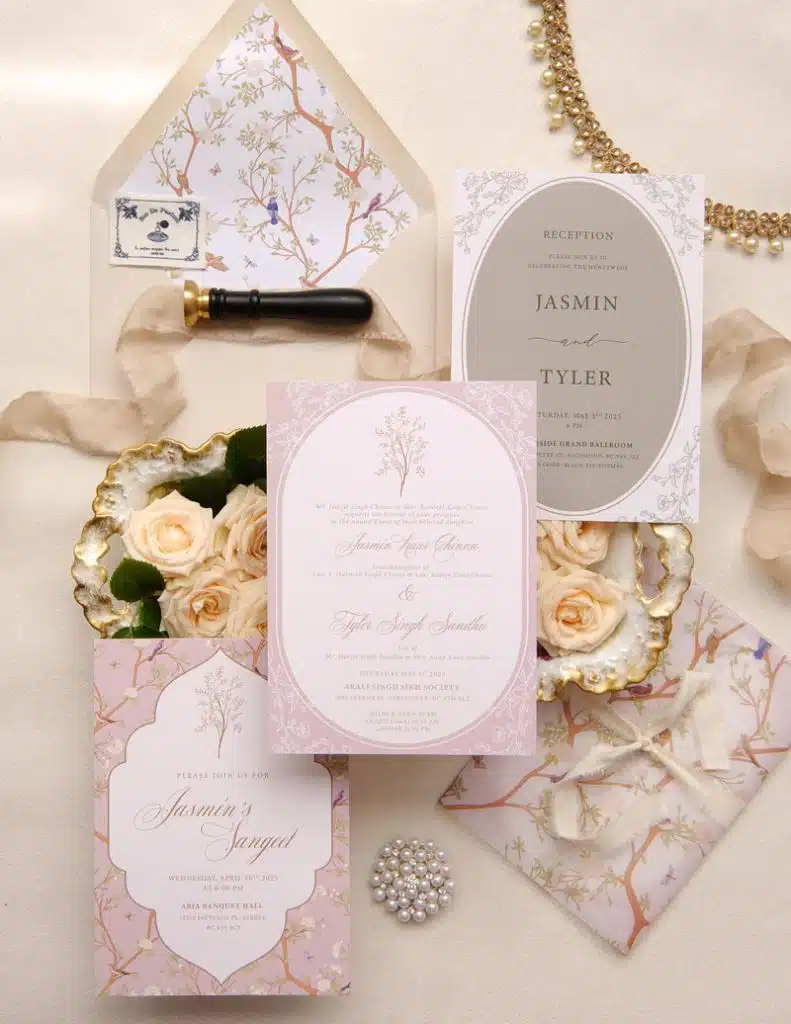
The formal invitation delivers the specific details for all your ceremonies, venues, and timings. Do not wait until the traditional 6-week window.
| When to Send | 8–10 Weeks Before the First Event |
| Why This Timing? | Event Details: All venues, ceremony times, and specifics (e.g., Sangeet attire, reception theme) are fully confirmed. Vendor Confirmation: Planners and caterers require finalized RSVP numbers earlier for the complexity of multi-day menus and guest counts. Finalizes Travel: This prompts any remaining guests to book their accommodation and travel immediately. |
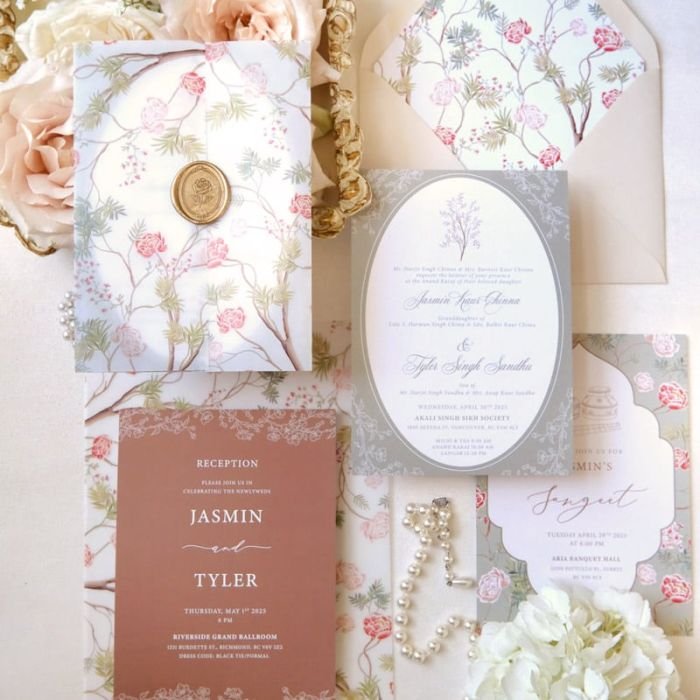
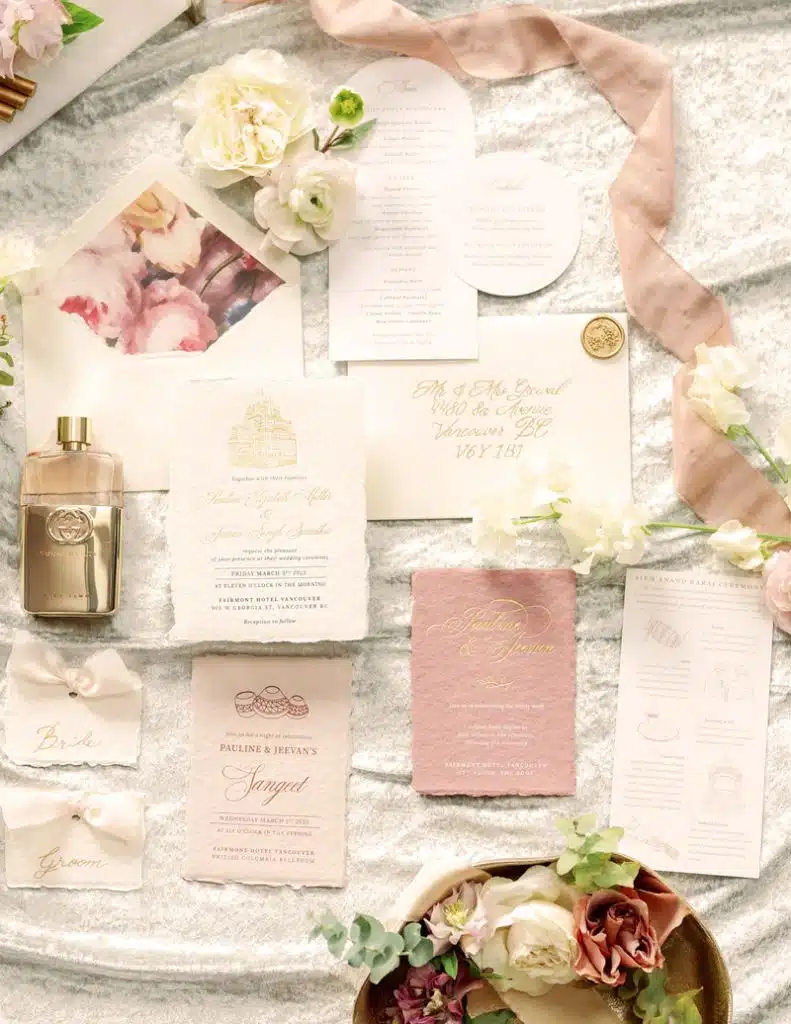
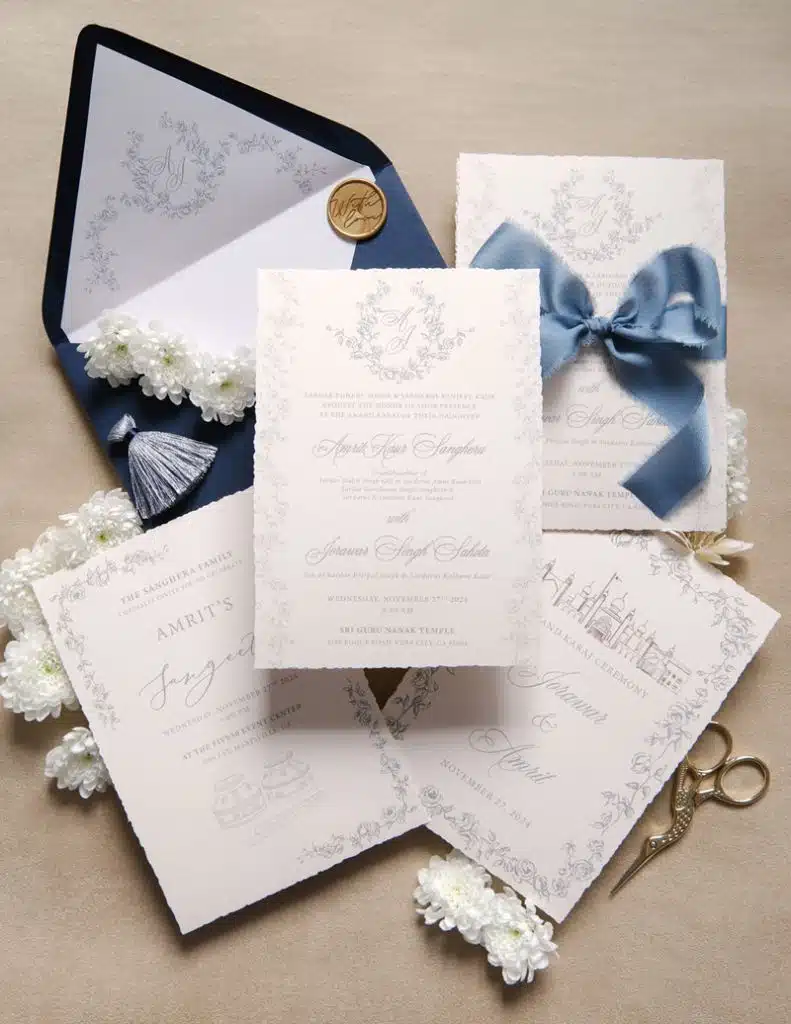
| Design & Experience Tip | Your full suite should be an heirloom. Include separate, elegant enclosure cards for each major event (Mehndi, Sangeet, Wedding Ceremony, Reception). Utilize high-end production techniques like heavy stock, unique paper textures, or custom foil finishes to convey the quality of your celebration. The Sahe Chithi, or the formal letter of announcement for Sikh weddings, is typically prepared and handed out in the final weeks leading up to the celebration, often coinciding with or slightly after the mailing of the formal invitations. Learn more about What is a Sahe Chithi, a Cultural Gem of Indian Weddings. |
Phase 3: The RSVP Deadline (The Critical Cutoff)
The deadline is strategically set to benefit your vendor team and ensure your peace of mind.
| When to Set the Deadline | 4–6 Weeks Before the First Event |
| Why This Timing? | Final Counts: This provides you with a crucial two-week buffer to gracefully follow up with any late responses. Vendor Lock-in: Caterers, rental companies, and venues require final, guaranteed numbers 10-14 days out for ordering and staffing. Seating Charts: Planning an intricate seating arrangement for a large Indian wedding is complex—this time is essential for perfect execution. |
| Design & Experience Tip | Make the RSVP process seamless. Encourage online RSVPs via your wedding website. If you include a physical card, provide a stamped, pre-addressed envelope for absolute ease of return. |

Phase 4: The Final Gentle Reminder (The Logistics Check)
While not a formal “invitation,” a final communication ensures a successful and seamless guest experience.
| When to Send | 2–3 Weeks Before the First Event |
| What to Include? | A friendly email or broadcast linking back to your wedding website. Include helpful reminders about hotel check-in/check-out, transportation shuttle schedules, and final attire notes to prepare guests for the full multi-day itinerary. |
Conclusion: Timeliness is the Mark of a Grand Celebration
For an elaborate Indian wedding with an intricate, multi-day itinerary, choosing the correct Indian Wedding Invitation Timing is the foundation of a successful event. By strategically planning for travel, logistics, and multi-day commitments, you honor your guests and guarantee a spectacular, stress-free celebration.
Ready to design a stationery suite that perfectly aligns with your sophisticated event timeline?
For more detailed timelines covering specific ceremonies and events, check out our comprehensive Sikh Wedding Planner: Planning Your Perfect Anand Karaj.
Contact Esgee Art & Design today to begin crafting your bespoke wedding suite.
Related Posts
Clear Filters